
Welcome! This 2013 Honda Fit owner’s manual provides essential information for safe and enjoyable vehicle operation‚ referencing official Honda resources and PDF downloads․

Overview of the 2013 Honda Fit
The 2013 Honda Fit is a subcompact car renowned for its versatility and fuel efficiency․ Available as a hatchback‚ it boasts a surprisingly spacious interior thanks to Honda’s innovative “Magic Seat” system‚ allowing for multiple seating and cargo configurations․ This model year continues Honda’s commitment to reliability and practicality․
Owners can access the official 2013 Honda Fit owner’s manual in PDF format via Honda’s Tech Info website (techinfo․honda․com)․ It’s a practical vehicle‚ offering a comfortable ride and responsive handling․ The 2013 model provides a solid foundation for daily commuting and weekend adventures‚ making it a popular choice for diverse drivers․
Importance of the Owner’s Manual
Your 2013 Honda Fit owner’s manual is a vital resource for understanding your vehicle’s operation and maintenance․ It details safety features‚ driving techniques‚ and troubleshooting tips‚ ensuring optimal performance and longevity․ Accessing the PDF version (available through Honda’s official website – owners․honda․com) provides convenient‚ readily available information․
Familiarizing yourself with the manual helps prevent potential issues and ensures safe driving practices․ It covers everything from starting the engine to understanding dashboard indicators․ Proper maintenance‚ as outlined in the manual‚ protects your investment and maintains the vehicle’s value․ Ignoring the manual could lead to costly repairs or safety hazards․

Understanding Your Vehicle
Explore your 2013 Honda Fit’s features! This section details key specifications‚ dashboard symbols‚ and crucial safety systems‚ referencing the official owner’s manual․
Key Features and Specifications
The 2013 Honda Fit boasts impressive versatility and fuel efficiency․ Key features include its innovative “Magic Seat” system‚ offering multiple configurations for cargo and passengers․ Available in various trims‚ it typically features a 1․5-liter inline-4 engine‚ delivering around 117 horsepower and 106 lb-ft of torque․
Transmission options include a five-speed manual or a continuously variable transmission (CVT)․ Standard equipment often encompasses air conditioning‚ power windows and locks‚ and a basic audio system․ Higher trims may add features like alloy wheels‚ a sunroof‚ and a more advanced audio system․ Dimensions vary slightly by trim‚ but generally‚ the Fit offers a compact footprint with surprising interior space․ Refer to the official Honda owner’s manual for precise specifications related to your specific vehicle․
Dashboard Symbols and Indicators
Understanding your 2013 Honda Fit’s dashboard symbols is crucial for safe operation․ The illumination of warning lights indicates potential issues requiring attention․ A solid brake warning light signals a parking brake engagement or system malfunction․ The check engine light indicates a problem with the engine or emissions system – consult a mechanic․
The battery warning light signifies a charging system issue․ Low fuel and temperature warnings alert you to critical levels․ Indicators for turn signals‚ high beams‚ and cruise control provide operational status․ Refer to your Honda Fit owner’s manual for a comprehensive explanation of each symbol‚ including their color variations (red‚ yellow‚ green) and associated actions needed․ Ignoring warning lights can lead to more significant damage․
Safety Features Explained
The 2013 Honda Fit prioritizes occupant safety with a suite of features․ Standard equipment includes Vehicle Stability Assist (VSA) to enhance control during challenging driving conditions‚ preventing skidding․ Anti-lock Braking System (ABS) prevents wheel lockup during hard braking‚ maintaining steering control․ Front and side airbags provide crucial protection in collisions․
The Honda Fit also features a reinforced body structure designed to absorb and distribute impact forces․ Properly utilizing seatbelts is paramount for all occupants․ Child safety seat anchors (LATCH system) facilitate secure installation of child restraints․ Review your owner’s manual for detailed instructions on these systems and safe driving practices․ Understanding these features maximizes your safety on the road․

Operating Your 2013 Honda Fit
Mastering your Fit! This section details essential procedures – starting‚ driving‚ fueling‚ and understanding the manual transmission for optimal performance․
Starting and Stopping the Engine
Starting Procedure: Ensure the parking brake is engaged and the gear selector is in neutral (manual transmission) or Park (automatic)․ Insert the key into the ignition and turn it to the “II” position․ This activates the vehicle’s electrical systems․ Then‚ turn the key further to the “START” position and hold until the engine starts․ Release the key immediately upon engine start․
Stopping Procedure: Gently apply the brakes to slow down․ Shift the gear selector to neutral (manual) or Park (automatic)․ Turn the ignition key to the “LOCK” position to stop the engine․ Always engage the parking brake‚ especially when parked on an incline․ Refer to the owner’s manual for detailed instructions and safety precautions regarding engine operation․
Driving Techniques and Tips
Smooth Acceleration: For optimal fuel efficiency and a comfortable ride in your 2013 Honda Fit‚ accelerate smoothly and gradually․ Avoid abrupt acceleration‚ which wastes fuel and increases wear on the engine and transmission․
Anticipate Traffic: Look ahead and anticipate traffic flow to minimize unnecessary braking and acceleration․ Maintaining a safe following distance provides ample reaction time․ Utilize the manual transmission effectively by selecting the appropriate gear for the driving conditions․
Cornering: Approach corners at a safe speed and steer smoothly․ Avoid sharp steering maneuvers․ Consult the owner’s manual for specific driving recommendations and safety features․
Fueling Instructions
Fuel Type: Your 2013 Honda Fit requires unleaded gasoline with an octane rating of 87 or higher․ Refer to your owner’s manual for detailed fuel specifications; Using lower octane fuel may reduce engine performance and potentially cause damage․
Fueling Procedure: Before refueling‚ turn off the engine and ensure the vehicle is on a level surface․ Locate the fuel filler door and carefully remove the fuel cap․ Insert the fuel nozzle fully into the filler neck and begin fueling․
Safety Precautions: Avoid overfilling the fuel tank․ Do not smoke or use open flames near the fuel filler area․ Consult the owner’s manual for complete fueling instructions and safety guidelines․
Understanding the Transmission (Manual)
The 2013 Honda Fit’s manual transmission features five forward gears and one reverse gear․ Smooth operation requires coordinating clutch pedal engagement with gear selection using the shift lever․ Fully depress the clutch pedal before shifting gears to prevent grinding․
Shifting Gears: To upshift‚ release the accelerator‚ depress the clutch‚ move the shift lever to the desired higher gear‚ and smoothly release the clutch while gently applying the accelerator․ Downshifting follows a similar process‚ matching engine speed to the lower gear․
Proper Technique: Avoid riding the clutch‚ as this causes premature wear․ Refer to the owner’s manual for detailed instructions and troubleshooting tips regarding the manual transmission․

Maintenance and Care
Regular maintenance‚ as outlined in the 2013 Honda Fit owner’s manual‚ ensures optimal performance and longevity; schedule services promptly for peak reliability․
Scheduled Maintenance Services
Maintaining your 2013 Honda Fit requires adherence to a strict maintenance schedule‚ detailed within the official owner’s manual (available as a PDF)․ These services are crucial for preserving vehicle reliability and safety․ Key intervals include oil and filter changes‚ tire rotations‚ fluid level checks (brake‚ coolant‚ power steering‚ and windshield washer)‚ and air filter replacements․ Honda recommends specific inspection points at various mileage milestones‚ covering components like belts‚ hoses‚ and the exhaust system․
Furthermore‚ the manual outlines the importance of valve adjustments and spark plug replacements to ensure optimal engine performance․ Following the recommended schedule not only extends the life of your Fit but also helps maintain its resale value․ Refer to the Honda owners website for detailed service intervals and qualified service centers․
Checking Fluid Levels
Regularly inspecting fluid levels is vital for your 2013 Honda Fit’s health․ The owner’s manual (accessible as a PDF) details the procedure for checking engine oil‚ coolant‚ brake fluid‚ power steering fluid (if equipped)‚ and windshield washer fluid․ Locate the dipsticks and reservoirs‚ ensuring the vehicle is on level ground․ Wipe the dipstick clean‚ reinsert it fully‚ and then check the level against the marked indicators․
Low fluid levels can indicate leaks or increased consumption‚ requiring immediate attention․ Always use the recommended fluid types specified in the Honda manual․ Proper fluid levels ensure optimal performance and prevent damage to critical components․ Consistent monitoring‚ as outlined in the Honda resources‚ is key to preventative maintenance․
Tire Maintenance and Replacement
Proper tire maintenance extends the life of your 2013 Honda Fit’s tires and ensures optimal safety․ The owner’s manual details recommended tire pressures – found on the driver’s side doorjamb – and stresses the importance of regular checks with a reliable gauge․ Inspect tires for wear‚ damage (cuts‚ bulges)‚ and uneven tread․ Rotate tires according to the schedule in the manual to promote even wear․
When replacement is necessary‚ use tires of the correct size and load rating‚ as specified by Honda․ The manual also covers proper wheel nut tightening procedures․ Ignoring tire maintenance can lead to reduced fuel efficiency‚ compromised handling‚ and increased risk of accidents․ Refer to the PDF manual for detailed guidance․
Battery Care and Maintenance
Maintaining your 2013 Honda Fit’s battery is crucial for reliable starting and electrical system performance․ The owner’s manual advises keeping the battery terminals clean and free of corrosion; a baking soda and water solution can be used for cleaning․ Regularly inspect the battery case for cracks or damage․ Avoid leaving lights on or accessories running when the engine is off‚ as this can drain the battery․
If the battery frequently needs jumping‚ it may indicate a problem requiring professional attention․ The manual details proper jump-starting procedures․ When replacing the battery‚ use a Honda-approved replacement or equivalent․ Consult the PDF manual for specific battery specifications and safety precautions․
Troubleshooting Common Issues
Addressing typical problems like dead batteries or warning lights is covered in the 2013 Honda Fit manual‚ offering simple fixes and guidance for owners․
Dealing with a Dead Battery
A dead battery can be frustrating‚ but the 2013 Honda Fit owner’s manual provides clear instructions․ First‚ ensure the parking lights are off․ Jump-starting is a common solution; connect the jumper cables correctly – positive to positive‚ negative to a grounded metal surface on the Fit‚ not the battery terminal․
Alternatively‚ a portable jump starter can be used․ If jump-starting fails‚ the battery may need replacement․ The manual details battery specifications for proper replacement․ Regular battery care‚ as outlined in the manual‚ can help prevent future issues․ Consider professional assistance if you’re uncomfortable performing these steps‚ prioritizing safety always․ Refer to the manual for specific diagrams and warnings․
Addressing Warning Lights
The 2013 Honda Fit’s dashboard features various warning lights‚ each signaling a potential issue․ The owner’s manual is crucial for accurate interpretation․ A solid illumination indicates a current problem requiring attention‚ while a flashing light often signifies a more urgent concern․
Common lights include the check engine light‚ oil pressure‚ and battery warning․ Don’t ignore these! The manual details specific actions for each light – some may allow continued (but cautious) driving‚ while others necessitate immediate stopping․ Ignoring warning lights can lead to more significant damage․ Consult a Honda dealer if unsure‚ referencing the manual’s diagnostic information for effective communication․
Simple Fixes for Common Problems
The 2013 Honda Fit owner’s manual outlines solutions for minor issues․ A dead battery can often be jump-started – the manual details proper procedure and safety precautions․ For a blown fuse‚ the manual’s fuse box diagram helps identify and replace the faulty fuse․
Simple troubleshooting for lights includes checking bulbs and connections․ If the vehicle won’t start‚ verify fuel level and battery connections․ The manual emphasizes safety; if unsure‚ consult a qualified mechanic․ Regularly checking fluid levels (as detailed in the manual) can prevent larger problems․ Remember‚ these are basic fixes; complex issues require professional attention․

Detailed Component Information
Explore in-depth details about the 2013 Honda Fit’s braking‚ engine‚ and electrical systems‚ referencing the official service manual for comprehensive diagrams and explanations․
Understanding the Braking System
The 2013 Honda Fit utilizes a hydraulic dual-circuit braking system‚ featuring ventilated front discs and drum brakes in the rear; This setup ensures reliable stopping power and redundancy in case of a component failure․
Anti-lock Braking System (ABS) is standard‚ preventing wheel lockup during hard braking for enhanced steering control․ The system incorporates sensors at each wheel to monitor speed and adjust brake pressure accordingly․ Familiarize yourself with the ABS operation; a pulsing sensation in the brake pedal is normal during ABS activation․
Regular inspection of brake pads‚ rotors‚ and fluid levels is crucial for optimal performance․ Consult the owner’s manual for recommended maintenance intervals․ Proper brake maintenance contributes significantly to vehicle safety and longevity․ Always use Honda-approved brake components for replacements․
The Engine and its Components
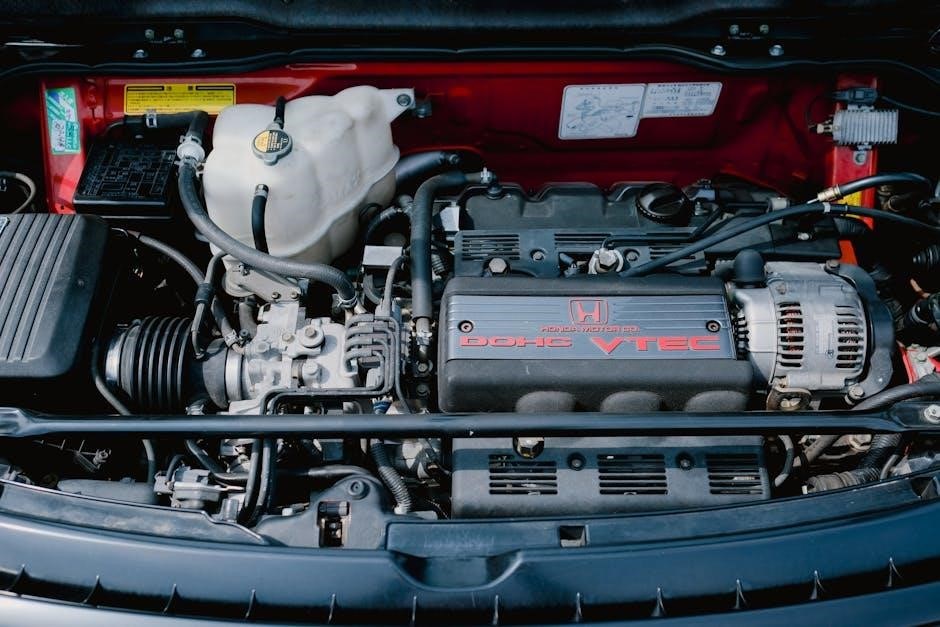
The 2013 Honda Fit is equipped with a 1․5-liter‚ inline four-cylinder engine․ This engine utilizes Honda’s i-VTEC (Variable Valve Timing and Lift Electronic Control) technology‚ optimizing performance and fuel efficiency․ Key components include the cylinder head‚ engine block‚ pistons‚ crankshaft‚ and camshaft․
The engine relies on a sophisticated fuel injection system and ignition system for combustion․ Regular oil changes‚ using the specified Honda oil grade‚ are vital for engine longevity․ The cooling system‚ comprising a radiator and coolant‚ prevents overheating․
Refer to the owner’s manual for detailed diagrams and specifications․ Understanding these core components aids in recognizing potential issues and performing routine maintenance․ Proper engine care ensures reliable operation and maximizes the vehicle’s lifespan․
Electrical System Overview
The 2013 Honda Fit’s electrical system powers numerous functions‚ from starting the engine to operating lights and accessories․ A 12-volt battery provides the initial power source‚ recharged by the alternator while the engine runs․ Fuses protect circuits from overloads‚ preventing damage․
Key components include the starter‚ alternator‚ wiring harnesses‚ and various sensors․ The engine control unit (ECU) manages engine functions via electrical signals․ The illumination system encompasses headlights‚ taillights‚ and interior lights․
Consult the owner’s manual for fuse box diagrams and component locations․ Proper maintenance‚ including battery care‚ is crucial․ Always disconnect the battery before performing electrical repairs․ Understanding the system ensures safe and efficient operation․

Resources and Support
Honda provides extensive support‚ including the official owner’s manual PDF‚ the Honda Owners website‚ and active community forums for 2013 Fit owners․
Locating the Official Honda Owner’s Manual (PDF)
Accessing your 2013 Honda Fit’s official owner’s manual in PDF format is straightforward․ Honda provides a digital version readily available for download․ A primary source is techinfo․honda․com‚ specifically referencing document K61313OM․pdf for the 2013 Fit․
Alternatively‚ navigate to Honda’s official owners website – owners․honda․com – and locate the resources section․ You can search by year and model (2013 Honda Fit) to find the corresponding manual․ This digital copy offers convenient access to all the information contained in the printed version‚ allowing you to easily reference procedures and specifications whenever needed․ Ensure a stable internet connection for a smooth download process․
Honda Owners Website
The official Honda Owners website (owners․honda․com) serves as a central hub for all your 2013 Honda Fit support needs․ Beyond the downloadable owner’s manual‚ the site offers a wealth of resources‚ including maintenance schedules‚ warranty information‚ and frequently asked questions․
You can register your vehicle for personalized service reminders and access exclusive owner benefits․ The website also provides links to genuine Honda parts and accessories‚ as well as a dealer locator to find authorized service centers near you․ Furthermore‚ explore the online resources for navigation system updates and detailed component information related to your 2013 Honda Fit‚ ensuring optimal vehicle performance and longevity․
Community Forums and Support Groups
Engage with fellow 2013 Honda Fit owners through vibrant online community forums‚ such as the dedicated r/Honda subreddit․ These platforms offer a collaborative space to share experiences‚ troubleshoot issues‚ and gain valuable insights from other enthusiasts․
Discuss maintenance tips‚ modifications‚ and common problems specific to the 2013 model year․ Benefit from collective knowledge regarding the manual transmission‚ electrical systems‚ and other vehicle components․ These groups often provide DIY repair guides and recommendations for reliable service providers․ Accessing these communities complements the official Honda owner’s manual‚ fostering a supportive network for all Fit owners․
Warranty Information
Understand your coverage! The 2013 Honda Fit warranty details outline component protection‚ claim procedures‚ and limitations – consult Honda for specifics․

Warranty Coverage Details
The 2013 Honda Fit’s original warranty typically included a 3-year/36‚000-mile bumper-to-bumper coverage‚ protecting against defects in materials and workmanship․ Additionally‚ a 5-year/60‚000-mile powertrain warranty covered major engine and transmission components․
Rust protection often had a 5-year/unlimited-mileage warranty․ However‚ these warranties are subject to transferability and may have expired depending on the vehicle’s age and mileage․
Specific coverage details‚ including exclusions‚ can be found in the original warranty booklet or by contacting a Honda dealership with the vehicle’s VIN․ Extended warranties may also be available or previously purchased by prior owners‚ offering continued protection beyond the factory coverage period․
How to File a Warranty Claim
To file a warranty claim for your 2013 Honda Fit‚ first‚ locate an authorized Honda dealership․ Schedule a service appointment‚ explaining the issue and referencing your warranty․ Bring your owner’s manual and any relevant service records․
The dealership’s service technicians will diagnose the problem and determine if it’s covered under warranty․ They will then submit the claim to Honda for approval․
Ensure all documentation is accurate and complete to avoid delays․ If your claim is approved‚ the dealership will perform the necessary repairs‚ covered by the warranty terms․ Contact Honda Customer Service if you encounter difficulties or have questions regarding the claim process․