
Tampa Construction & Engineering Considerations
Tampa Bay’s construction landscape presents unique challenges, notably regarding sinkhole activity and high wind designs (145 mph).
Commercial general contracting demands diligent structural engineer due diligence, alongside understanding uplift calculations for steel joists.
Overview of Tampa Bay Area Construction
The Tampa Bay area’s construction industry is characterized by a dynamic blend of residential, commercial, and infrastructure projects, all heavily influenced by the region’s unique geological and meteorological conditions. Historically, concrete masonry unit (CMU) construction was prevalent in residential buildings, particularly those built in the 1950s and 60s, showcasing a durable, yet sometimes problematic, building approach.
Today, modern construction incorporates advanced materials and techniques, but still requires careful consideration of factors like sinkhole potential and high wind loads – a design standard of 145 mph is common. Commercial general contractors navigate a complex regulatory environment, relying heavily on the expertise of structural engineers for project approvals, especially concerning open web steel joist uplift calculations. Resources like Newman’s Engineering Course, a well-regarded local training program, contribute to the professional development of engineers in the area.
Furthermore, the area benefits from active engineering forums and professional networks, fostering collaboration and knowledge sharing amongst practitioners.
Geotechnical Challenges in Tampa
Tampa’s subsurface conditions present significant geotechnical challenges for construction projects. The area is underlain by karst topography, characterized by soluble bedrock – primarily limestone – leading to a high susceptibility to sinkhole formation. This necessitates thorough geotechnical investigations, including subsurface explorations and hydrogeological assessments, to identify potential sinkhole risks before and during construction.
Mitigation strategies often involve ground improvement techniques such as compaction grouting, chemical grouting, or deep dynamic compaction to stabilize the subsurface and reduce the risk of sinkhole development. Understanding soil bearing capacity and settlement characteristics is also crucial, particularly for supporting heavy structures.
Furthermore, the presence of high groundwater levels and compressible soils adds complexity to foundation design. Careful consideration must be given to drainage systems and foundation types to ensure long-term stability and prevent differential settlement. These geotechnical factors significantly impact construction costs and timelines in the Tampa Bay area.
Sinkhole Activity and Mitigation
Sinkhole activity is a prominent geotechnical hazard in the Tampa Bay region, stemming from the underlying karst limestone geology. Reports indicate a history of sinkhole claims, prompting insurance scrutiny and highlighting the need for proactive mitigation. Thorough site investigations are paramount, utilizing techniques like Ground Penetrating Radar (GPR) and borehole drilling to identify subsurface voids and weak zones.
Mitigation strategies vary based on the sinkhole’s characteristics. For cover-subsidence sinkholes, compaction grouting is frequently employed to fill voids and stabilize the soil. Cover-collapse sinkholes, posing a more immediate threat, may require more extensive remediation, potentially including excavation and backfilling with engineered materials.
Proper drainage management is also critical, as water infiltration exacerbates sinkhole formation. Implementing robust stormwater control measures and diverting surface water away from vulnerable areas can significantly reduce risk. Ongoing monitoring and maintenance are essential to detect and address any developing sinkhole activity promptly.
Guardrail Deflection Limitations in Tampa
Determining appropriate guardrail deflection limitations in Tampa, Florida, requires careful consideration of local conditions and relevant standards. While specific Tampa-centric resources proving exact deflection limits are scarce, adherence to state and federal guidelines is crucial. Typically, guardrail systems are designed to deflect within specified parameters to absorb impact energy and redirect vehicles safely.
Factors influencing deflection include guardrail type (e.g., W-beam, box beam), post spacing, soil conditions, and impact severity. Engineers must perform rigorous calculations, accounting for these variables, to ensure the system meets performance criteria. The Florida Department of Transportation (FDOT) provides specifications and testing protocols for guardrail installations.
Given the potential for high-speed traffic and challenging soil conditions, conservative design approaches are often warranted. Thorough analysis, coupled with adherence to established standards, is essential for ensuring the safety and effectiveness of guardrail systems in the Tampa area.

Structural Engineering in Tampa
Tampa’s structural engineering frequently involves CMU construction, particularly in older residential buildings (1950s-60s). Steel joist uplift calculations and flat roof solar panel wind load assessments are common.
CMU Construction in Residential Buildings
Concrete Masonry Unit (CMU) construction in Tampa residential buildings has a notable history, particularly prevalent in homes constructed during the 1950s and 1960s. While current practices may vary, many older properties throughout the Tampa Bay area showcase CMU as a primary building material. This method offered durability and cost-effectiveness at the time, contributing to its widespread adoption.
However, modern residential construction often favors alternative materials. When utilizing CMU today, careful consideration must be given to tie beams and proper structural engineering oversight. Due diligence with structural engineers is crucial, especially for those unfamiliar with the engineer’s prior work. Ensuring adequate structural support and adherence to current building codes is paramount for safety and longevity. The resurgence of interest in durable building materials may lead to renewed CMU applications, but always with updated engineering practices.

Historical CMU Usage in Tampa (1950s-1960s)
During the 1950s and 1960s, Tampa experienced a building boom where Concrete Masonry Units (CMU) became a dominant material for residential construction. Many homes constructed during this period utilized CMU for its affordability, fire resistance, and relative ease of construction. This era saw a significant number of single-family dwellings built with CMU walls, often featuring simple, block-style designs.
The prevalence of CMU construction reflected the post-war housing demand and the availability of materials. However, these older CMU structures may not meet current building code standards for wind resistance or seismic activity. Retrofitting and structural assessments are often necessary for renovations or expansions. Understanding the historical context of these buildings is vital for modern engineers and contractors undertaking restoration projects in the Tampa Bay area, ensuring both preservation and safety.
Steel Joist Uplift Calculations
Accurate uplift calculations for open web steel joists are crucial in Tampa’s construction, particularly with the region’s high wind speeds. Structural Engineers require these calculations before approving shop drawings, ensuring the joists can withstand anticipated loads and prevent structural failure. These calculations determine the forces attempting to lift the joists from their supporting walls or beams.
Factors considered include dead loads (weight of the roof itself), live loads (snow, rain, or maintenance personnel), and wind loads, which are especially significant in Tampa’s hurricane-prone climate. Proper calculations involve determining the joist’s capacity to resist uplift, considering its geometry, material properties, and connection details. Ignoring these calculations can lead to catastrophic consequences, making precise engineering analysis paramount for safe and compliant construction.
Open Web Steel Joist Design Requirements
Open web steel joists, frequently utilized in Tampa’s commercial and residential construction, necessitate adherence to stringent design requirements. These requirements stem from building codes and industry standards, ensuring structural integrity and safety, especially given the area’s 145 mph high wind design considerations. Joist spacing, span length, and load capacity are critical parameters determined during the design phase.
Designers must account for deflection limits, preventing excessive bending that could compromise the roof system. Connection details – how the joists attach to supporting beams and walls – are equally vital, requiring robust welding or bolting to resist uplift forces. Furthermore, fire resistance is a key concern, often necessitating the application of fireproofing materials. Compliance with these requirements, verified through thorough engineering analysis, is essential for obtaining building permits and ensuring long-term structural performance.
Flat Roof Solar Panel Installation ౼ Wind Load Considerations
Installing solar panels on flat roofs in Tampa demands meticulous attention to wind load considerations, given the region’s susceptibility to high winds – a design standard of 145 mph. Simply anchoring panels isn’t sufficient; the entire system must withstand uplift forces and lateral pressures. Engineers must calculate wind loads based on roof geometry, panel orientation, and local wind maps.
Two primary attachment methods exist: penetrating the roof membrane or utilizing ballast systems. Penetration requires careful sealing to prevent leaks, while ballasting relies on the weight of the panels and associated materials. Both methods necessitate structural analysis to ensure the roof can bear the added load. Furthermore, panel spacing and edge detailing play a crucial role in minimizing wind uplift. Proper design and installation, adhering to local building codes, are paramount for a safe and durable solar panel system.

Material Identification & Standards
Identifying PC/ABS blends can be challenging; FT-IR spectroscopy often yields only PC spectra. ASME B16.11 pressure ratings (3000, 6000, 9000) dictate appropriate test pressures for components.
Identifying PC/ABS Blends
Determining the composition of Polycarbonate/Acrylonitrile Butadiene Styrene (PC/ABS) blends presents a significant analytical hurdle. While various techniques exist for polymer identification, accurately quantifying the ratio of PC to ABS within a blend proves particularly complex. Initial attempts often involve Fourier-Transform Infrared (FT-IR) spectroscopy, a common method for identifying organic materials based on their vibrational characteristics.
However, as noted in discussions amongst engineering professionals, relying solely on FT-IR can be misleading. The strong spectral signature of Polycarbonate frequently dominates the resulting spectrum, effectively masking the presence of ABS. This occurs because PC exhibits more prominent and easily detectable absorption bands within the typical FT-IR range. Consequently, analysts may incorrectly conclude that the material consists entirely of PC, overlooking the ABS component.

Therefore, alternative or complementary analytical methods are often required to achieve a comprehensive understanding of the blend’s composition. These may include techniques like Differential Scanning Calorimetry (DSC) to assess thermal properties, or specialized chromatographic methods capable of separating and quantifying the individual polymer components. Accurate identification is crucial for ensuring material performance and adherence to relevant standards.
FT-IR Spectroscopy Limitations for PC/ABS
Utilizing Fourier-Transform Infrared (FT-IR) spectroscopy for PC/ABS blend analysis encounters inherent limitations stemming from spectral overlap. The dominant infrared absorption characteristics of Polycarbonate (PC) frequently overshadow the weaker signals originating from Acrylonitrile Butadiene Styrene (ABS), leading to inaccurate compositional assessments. This phenomenon arises because PC possesses more intense and readily identifiable absorption bands within the standard FT-IR spectral range.
Consequently, a spectrum may predominantly display PC’s signature, misleading analysts into believing the material is solely PC, neglecting the ABS component. This is a recurring issue highlighted in engineering forums, where professionals discuss challenges in accurately quantifying the ABS content. The relative concentrations of each polymer significantly impact the final spectrum, and subtle ABS peaks can be easily obscured.
Therefore, relying exclusively on FT-IR for PC/ABS identification is insufficient. Complementary analytical techniques, such as DSC or chromatographic methods, are essential for a complete compositional profile. Proper material characterization is vital for ensuring appropriate application and performance, particularly in structural components where blend properties are critical.
ASME B16.11 Pressure Ratings (3000, 6000, 9000)
ASME B16.11 defines pressure-temperature ratings for wrought steel piping components, utilizing numerical designations like 3000, 6000, and 9000. These numbers don’t represent actual pressure limits in PSI, but rather a code indicating allowable stress levels at specified temperatures. Higher numbers correlate to increased allowable stresses and, consequently, higher pressure capabilities. A 3000 rating signifies a lower allowable stress than a 6000 or 9000 rating.
These ratings are crucial for selecting appropriate fittings, flanges, and valves for a given piping system. Engineers must consider the operating temperature and fluid properties when determining the necessary pressure class. The standard provides detailed tables outlining allowable stresses for various materials and temperatures.
Understanding these ratings is paramount for ensuring system integrity and safety. Incorrect selection can lead to catastrophic failures. Proper application requires careful review of the ASME B16.11 standard and consideration of all operating conditions. Consulting with experienced piping engineers is often recommended, especially for critical applications.
Test Pressure Determination for ASME B16.11 Rating 9000
Determining the test pressure for ASME B16.11 9000-rated components necessitates careful calculation, exceeding the maximum allowable working pressure (MAWP). Typically, a hydrostatic test pressure is 1.5 times the MAWP, but this can vary based on specific project requirements and applicable codes. Non-destructive examination (NDE) is often performed during testing to verify joint integrity.
The MAWP itself is calculated considering the component’s material, dimensions, temperature, and the specified allowable stress for the 9000 rating. Accurate calculations are vital, as exceeding the design limits during testing can cause permanent deformation or failure. Detailed documentation of the test procedure, pressure readings, and NDE results is essential.
Furthermore, the testing medium (typically water) and temperature must be controlled. Proper venting and safety precautions are crucial during hydrostatic testing. Qualified personnel should oversee the entire process, ensuring adherence to all relevant standards and regulations. A thorough review of the ASME B16.11 standard is paramount.

Tampa-Specific Engineering Practices
Tampa’s engineering community benefits from Newman’s course, fostering expertise. Commercial projects require diligent structural engineer vetting, while high wind (145 mph) designs are crucial.
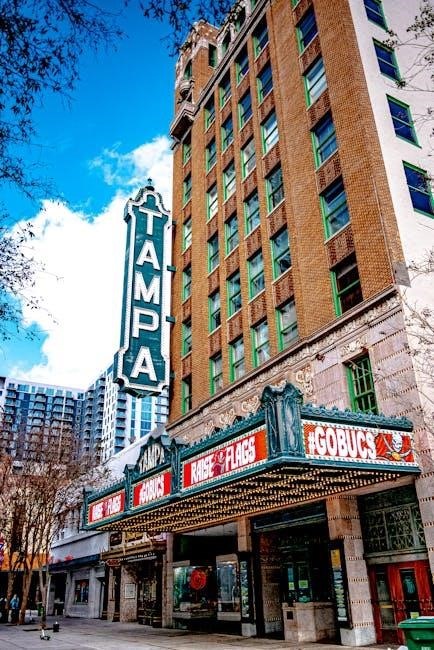
Newman’s Engineering Course in Tampa
Newman’s Engineering Course, frequently mentioned by Tampa Bay area professionals, has established a strong reputation for practical, real-world application of engineering principles. Several engineers have publicly praised the course’s comprehensive material and the instructor’s ability to convey complex concepts effectively.
Participants often highlight the course’s relevance to local building codes and the specific challenges presented by the Tampa environment – including high wind loads and geotechnical concerns. The course appears to be particularly valuable for those involved in commercial construction, offering insights into navigating the complexities of project management and structural design.
Testimonials suggest the course was offered as recently as 2018 or 2019, indicating its continued relevance. It’s a resource frequently recommended for both seasoned professionals seeking to update their knowledge and those new to the Tampa Bay area construction scene, emphasizing a commitment to best practices.
Commercial General Contracting in Tampa
Commercial general contracting in Tampa necessitates a keen understanding of the local engineering landscape and a proactive approach to risk management. Project managers frequently collaborate closely with structural engineers, particularly concerning open web steel joist uplift calculations and ensuring adherence to stringent wind load requirements (145 mph design standard).
Due diligence in selecting and vetting structural engineering firms is paramount, as is a clear understanding of material identification – specifically, challenges in differentiating PC/ABS blends using methods like FT-IR spectroscopy. Navigating potential sinkhole activity and associated insurance claims also forms a critical component of successful project execution.
Furthermore, familiarity with ASME B16.11 pressure ratings (3000, 6000, 9000) and appropriate test pressure determination is often required for projects involving pressurized systems. Effective communication and collaboration between the GC, engineer, and relevant specialists are essential for delivering projects on time and within budget in the competitive Tampa market.
Engineering Forums & Information Resources
Tampa Bay area engineers benefit from a variety of online and local resources. Eng-Tips stands out as a prominent forum for engineering professionals, fostering knowledge sharing and problem-solving across disciplines. Newman’s Engineering Course, frequently referenced by local practitioners, provides valuable training, particularly regarding structural design considerations specific to the region.
Accessing information regarding guardrail deflection limitations, a common challenge in Tampa projects, often requires diligent research and potentially consulting with experienced colleagues. Understanding historical construction practices, such as the prevalent use of CMU in residential buildings during the 1950s and 60s, can also inform current projects.
Staying current with evolving standards, like those related to flat roof solar panel installation and high wind design (145 mph), is crucial. These resources collectively empower Tampa engineers to navigate complex projects effectively and maintain professional development.

Due Diligence with Structural Engineers
Engaging a structural engineer in Tampa requires careful vetting, especially for projects involving unique challenges like sinkhole-prone areas or high wind zones (145 mph). Prior experience with CMU construction, prevalent in older residential buildings (1950s-60s), is a valuable asset. Thoroughly review their qualifications and project history.
Specifically, confirm their expertise in uplift calculations for open web steel joists, a frequent point of contention during shop drawing approvals. Request references and verify their understanding of local building codes and permitting processes. A proactive engineer will anticipate potential issues, such as those related to PC/ABS blend material identification or ASME B16.11 pressure ratings.
Don’t hesitate to discuss their familiarity with resources like Newman’s Engineering Course and relevant engineering forums. Effective communication and a collaborative approach are essential for a successful project outcome.
Tampa Bay Area Engineering Professionals

The Tampa Bay region boasts a robust network of engineering professionals, crucial for navigating the area’s specific construction challenges. Finding qualified individuals familiar with local geotechnical concerns – including sinkhole activity – is paramount. Experienced engineers understand the nuances of high wind design (145 mph) and its impact on structures.
Resources like Eng-Tips forums provide valuable connections and knowledge sharing opportunities. Professionals well-versed in CMU construction techniques, particularly those used in residential buildings from the 1950s and 60s, are highly sought after. Expertise in steel joist uplift calculations and ASME B16.11 pressure ratings is also essential.
Networking through industry events and leveraging recommendations from commercial general contractors can help identify reliable and skilled engineers for your project.
High Wind Design Considerations (145 mph)
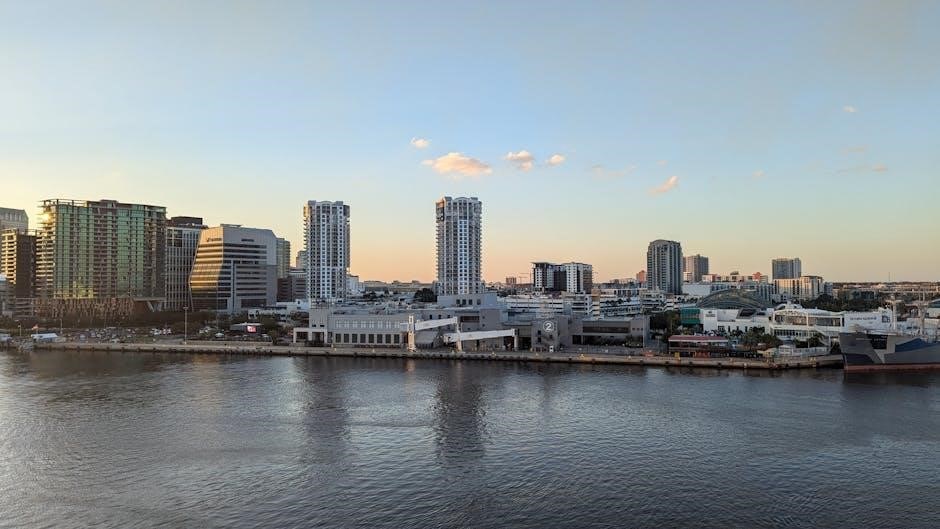
Tampa’s vulnerability to hurricanes necessitates stringent high wind design protocols, with a typical design speed of 145 mph. This significantly impacts roofing systems, particularly when considering solar panel installations. Penetrating the roof multiple times for anchoring, as much as 50 times, presents structural challenges requiring careful evaluation.
Engineers must meticulously assess wind loads and ensure adequate structural reinforcement. Open web steel joist designs require precise uplift calculations to maintain stability under extreme wind conditions. Guardrail deflection limitations also become critical, demanding thorough research and adherence to relevant standards;
Proper material selection and adherence to ASME B16.11 pressure ratings are vital for components exposed to high winds. A comprehensive understanding of these factors is essential for ensuring building safety and resilience in the Tampa Bay area.